

Video


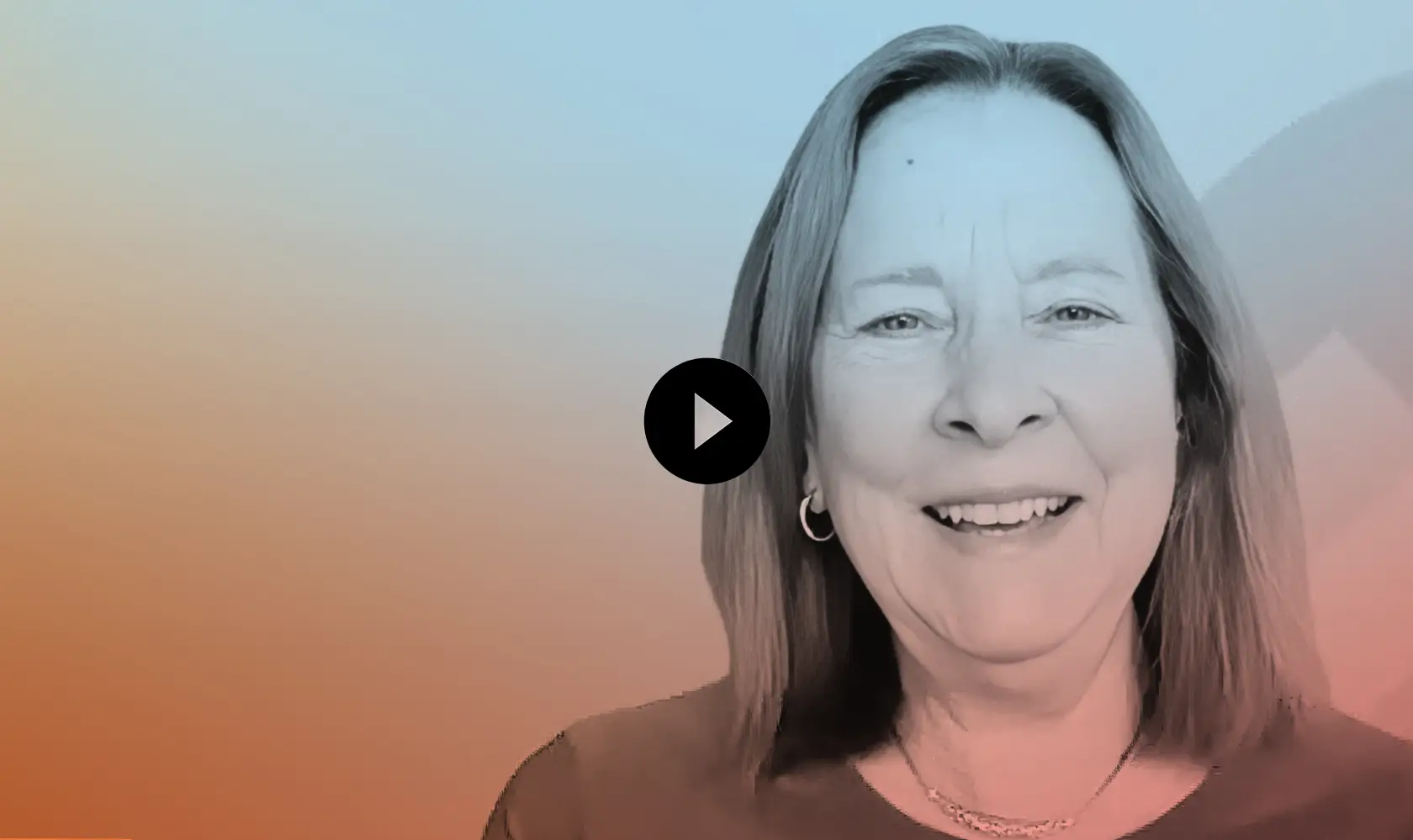
With Stephanie Georges and Kate Lilienthal
TRANSCRIPT (lightly edited for length)
Kate Lilienthal: Donna, I know a little bit about how you got to where you are from an academic perspective, but from a personal perspective, I think maybe there's a story there. We would like to hear it.
Donna Hicks: The personal part — I don't typically share it, and certainly not in the very beginning. But I am open to anything right now, anything that might be helpful to people. We need some intervention from something bigger than us.
I grew up in a mixed-ethnicity family. My father came from a Yankee family — ancestors who came here on the Mayflower. There was a long list of theologians, philosophers, educators. My great-great-great-great-grandfather was one of the founders of the Universalist Church here. I feel like I'm channeling a lot from these ancestors.
My mother, on the other hand, was a Polish immigrant. None of her family spoke English. They came to this country, bought a farm, and had 16 children — yes, 1-6, you heard that right. My mother was the only one of the 16 who went to school and got an education. She met my father in school — they grew up in a very small town. They fell in love in high school and got married immediately. But that was where the joy ended, basically, because they ended up getting along like oil and water. My father's family was so proper, and my mother's family was concerned about really practical things — just getting the cows in to milk them.
Long story short, it was awful growing up in that conflict — especially when two cultures were clashing. And even as a little kid, around 5 years old, I remember thinking: there's something wrong here. It's not supposed to be this way. We can do better than this. So honestly, this concept of dignity — how we treat each other, what good relationships are supposed to look like, how we resolve conflict in a healthy way, not a dysfunctional way — that started as soon as I could process. I feel like it has been following me around all my life.
It's not a surprise that I studied international conflict resolution as a graduate student. My PhD is actually in human development, but I apply it to conflict. What does it mean when we're in conflict, and how does that help or hinder our development as human beings? That question turned out to be quite handy when I started doing this dignity work.
I ended up studying the most intractable international conflicts at Harvard with my mentor, Professor Herbert Kelman. We were looking at the political issues that divided the parties, but mostly we were searching for how to address the human injuries that take place when intractable conflicts go on for years and years. The Israeli-Palestinian conflict was my mentor's focus — he was a Holocaust survivor who wanted to dedicate his life to trying to find a solution there.
Kate Lilienthal: My lights were going off when you talked about human injury. How does dignity provide a lens for healing?
Donna Hicks: That's one of the central questions for me. Over my 25 years working on intractable conflicts, I realized that identifying those human reactions as dignity violations — rather than calling them trauma or emotional responses — was a breakthrough. When I said to people, 'oh, that's such an emotional response,' they shut down. When I said 'that was traumatic,' it felt to them like weakness, and they didn't want to communicate that they were weak to the other side. Those words were non-starters.
Donna Hicks: It hit me like an epiphany one day. What they really want to say to each other is: how dare you treat us this way? We're human beings! You can't treat us this way. And once I got that, the word dignity popped into my head. I was in Colombia, South America, for one such intervention. There were military people, people from the Defense Department — a terrible conflict where the security of the country was actually at stake because these two groups in the government couldn't get along.
Donna Hicks: When I introduced the idea, I said: I can see, from working on intractable conflicts all my career, that you are experiencing deep human reactions to this conflict. I would really like to spend our time together talking about how your dignity has been assaulted, and what role that's playing in your inability to solve the issues you're grappling with together. I said: with your permission, I'd like to spend our two days talking about dignity. Can I have a show of hands? It was silent for about 30 seconds. I thought, oh no, I screwed up again. And then all of a sudden, the hands started popping up — 1, 2, 3, 4, 5 — everybody said yes. And they added: it's not just our dignity here, our ancestors have had all these dignity violations too, that we've inherited.
By the end of those two days, they were reconciled. The healing element was this: for the first time, someone asked them what was really going on inside — about those wounds to their sense of worth and value. How could you treat me this way if you think I'm worthy? They had these deep, deep conversations about their personal stories — not anything abstract, but about what actually happened to them in this conflict. And they had never told their stories before, certainly not to each other.
When people feel acknowledged for the suffering they've endured, that's when the healing process starts. My research has shown that dignity violations are just as serious as physical injuries — they show up in the brain in the same area as a physical wound. Once they heard that, they felt legitimized. And when they got acknowledgement from the other side — 'now I understand what we did here, we really injured each other' — they found that shared experience as a way to let go of the pain. Because they both agreed: this is what's happening. It was really quite moving, because it was evidence that I was on the right track.
Kate Lilienthal: This healing process — when you're working on a person's sense of dignity, their sense of self-worth — is it days, weeks, years? Does it depend on the person, the severity of the injury?
Donna Hicks: All of the above. Archbishop Desmond Tutu taught me this: when people have experienced dignity violations, they need acknowledgement for the suffering they've endured. And sometimes it doesn't take more than one person saying, 'Oh my gosh, that happened to you? That's terrible, that should never have happened.' Sometimes it only takes that — to be seen, to be heard, to be recognized.
Intergenerational dignity violations get passed down like a dominant gene. If you don't have them healed, if you don't get a good jumpstart to the process, they're going to linger on with some people. But all of us have experienced dignity wounds — I don't know any human being who hasn't. We need acknowledgement, and we need people around us who know what we've been through and can help us when we're feeling that tenderness and fragility that dignity wounds create. Dignity buddies, in a sense — Kate, you can call Stephanie and say, I know you're suffering, let's sit down and have a cup of coffee and talk about it. Of course, good therapy is also important, but we can't go to a therapist 24 hours a day. And there's nothing more powerful than a trusted person saying: I'm here, I'm committed to helping you. And it's reciprocal — it's not a one-way street.
Kate Lilienthal: Do you think women experience dignity any differently from men?
Donna Hicks: I think they're more willing to talk about it — more willing to be open about what's going on. Though of course that's not a generalization across the board. I'll admit: when I started this dignity work, I thought it might be something women could engage with more willingly than men. Boy, did I get that wrong. After my first book was published — Dignity: Its Essential Role in Resolving Conflict — I got calls from the corporate world, from healthcare, from education, faith communities. They all said: I think you've nailed our problem.
The first time I worked in the corporate world, with an executive leadership team — 1 woman and 12 men — I thought, this is going to be a little hard. It wasn't. There was this sense that I had identified something they had all experienced — and even something they may have perpetrated on their direct reports, the people they led. At first they thought it was just touchy-feely stuff. Then I went through the whole thing, including the neuroscience, and they really, truly embraced it.
I think men don't always feel the societal permission to be as intimate or vulnerable as quickly. But it really does depend on how safe they feel. Safety is everything when it comes to talking about dignity violations. Women with women often feel safe. And men — when the conditions were right, when they felt safe — were just as capable of going there. And they were grateful. They were really, really grateful.
Stephanie Georges: If you were to define dignity in a really simple and clear way — these words all resonate, worth, value, shared experience — but it can still feel ethereal sometimes. How do you make it concrete?
Donna Hicks: That was my first great challenge. It took me 7 years to write that first book, because I went through all the philosophers, all the theologians. I wanted practical answers. My goal was to reduce human suffering — because I saw it everywhere, in all these conflicts, in families — and to make the definition so simple that even kids could understand it, because I wanted to teach this in schools to teachers. I'm happy to report I fulfilled that goal.
What I ended up with was this: dignity is our inborn, inherent value and worth — and our inborn vulnerability to having it injured. You are born with dignity. It's not something you have to work for. Whatever external thing makes you feel good — a new job, a pay raise, whatever that is — that's frosting on the cake. The cake you're born with. And not only is it yours — every human being on this planet has the same inherent value and worth.
And this is probably the more fundamental part: dignity is different from respect. You hear them used together constantly, as if they were one word — 'dignity and respect.' Desmond Tutu taught me this distinction. He said: you are born with dignity, and you don't have to do anything to earn it. But respect, on the other hand, has to be earned. You're not going to turn away from a bad relationship and say, 'I respect you' — it doesn't work. But can we resolve our conflict in a way that preserves both of our inherent value and worth? Yes, we can. And that's what drove me to create the Dignity Model.
We're born with dignity, but we're not born knowing how to act like it — not born knowing how to treat each other this way. That is our job. There's an internal process — accepting your own dignity. And there's an external process — treating others with dignity. It's a two-way street. And the universality of this has opened doors for me everywhere in the world.
In my field, we say: to resolve conflicts, we have to find common ground. I don't believe that anymore. I say: we have to find higher ground. And dignity takes us there. If we accept that all human beings share this one thing — we might not share life experiences, cultures, race, or religion, but we all share the desire to be treated with dignity — that's the shared humanity that can bring us together. Our common ground is a mess. But dignity takes us to higher ground, to the highest common denominator we all experience.
Kate Lilienthal: What is a dignity practice? And does it vary by culture?
Donna Hicks: Before I answer that, there's another important step in the development of this model — the neuroscience. Our brain doesn't know the difference between a wound to our dignity and a physical injury. The pain and impact of a dignity violation is felt in our brains and in our whole bodies. All that cortisol that runs through us when someone humiliates us — that's the same as getting a physical injury. The area called the limbic system, and the amygdala in particular, is where we process the ancient emotions: love, fear, hate. When I shared this with executive teams, that was the thing that turned them around — 'oh my gosh, the brain doesn't know the difference?'
So I realized I had to make this really practical — so that people would understand clearly what it means to have their dignity violated, and what it means to violate somebody else's. I went around the world interviewing people, asking them to tell me about a time when their dignity was honored, and a time when it was violated. I expected cultural differences. I expected sex differences. Much to my surprise, what I found were 10 common patterns that emerged no matter where I was — Asia, Africa, North America, South America, Europe, the Middle East. The same emotional reactions to the same experiences.
The 10 elements of dignity: people want their identity accepted, no matter their race, religion, ethnicity, or sexual orientation. People want to be seen as equal in dignity, even if status differs — and people with a lot of power have more responsibility to be sure that those below them are treated with dignity. There is recognition — people want to be recognized for their unique qualities, recognized in the workplace for doing a good job. They want to feel safe — not just physical safety, but psychological safety. They want to be treated fairly, to be understood, to be given the benefit of the doubt. And people need acknowledgement for the suffering they've endured.
People say to me: these 10 elements are just common sense. And I say: yes, they're common sense, but they're not common practice. We have to learn this. And no matter where in the world, people react the same way. It feels almost magical — this shared humanity. And that's where we find our higher ground.
Stephanie Georges: We are in such a divisive place right now, and sometimes it's just hard. When you feel so differently from someone, when you're in such conflict — can you talk about that? Have you been in that place where it's just hard to even conjure up the ability to find that place of recognition? How can we practice getting over that hump when it's really challenging?
Donna Hicks: We're definitely in that place right now. I remember when I was working with Archbishop Tutu in Northern Ireland, convening dialogues between Catholics in Southern Ireland and Protestants in Northern Ireland. There was one man from the Protestant side whose history was appalling — his favorite way of killing people on the other side was to take a cinder block and smash their heads. When I knew this man was going to be there, I said to the Archbishop: I'm worried I'm not going to be able to see this person's dignity. And he said: yeah, I understand that. But Donna, if you can't see the dignity in that person, just keep digging.
Donna Hicks: An even more powerful story came from a podcast with John Lewis — Representative John Lewis. He was being interviewed, and the woman said: I know your whole civil rights tradition is based on Martin Luther King and having love be your guiding, non-violent force. And John Lewis said: yes, to this day I've stayed with that aspiration — to see the love in everybody and treat everybody that way. And she said: but I went online before our podcast, and I saw the footage of you crossing the bridge in Selma, and I saw this man hit you in the head with fierce anger, a fierce rejection of your dignity. And he said: of course, of course that was horrible. But the only way I could try to stay in a loving framework was to see that angry man as a little boy — as a little child — and ask myself: what happened to him? We are not born angry. We are not born to hate. He probably had a loveless life. Who knows what kind of violence he experienced, maybe parents who were physically and emotionally violent with him. So: think of people as kids. It really helps.
There's also an aspirational dimension to this. My husband always says, 'Don't forget to tell people you're a recovering dignity violator.' And it's true. We have good days and bad days. I snap at customer service agents — I want the seat closer to the front of the plane. We're going to mess up. The question is: how do we circle back? A neuroscientist taught me this, and also the wonderful Buddhist nun Pema Chodron — how do you get back to your present moment, to that sense of generosity and compassion? Meditation. Just 10 minutes to get yourself back centered on that shared goal — to interact with people in a way that sees their dignity, and honors your own.
For me, this work is a spiritual practice. It comes from a higher power — whatever you want to call it. I don't call it God, call it higher power, call it whatever you want. If you believe this is work that is meant to enhance our shared humanity and advance our consciousness, that's what gives you the motivation to keep going, even on the hard days.
Stephanie Georges: We typically close these conversations with: what is your Meraki? What is it that brings you meaning and fulfillment that you immerse yourself in with creativity and soul?
Donna Hicks: It started with what we talked about at the beginning — my early life, and realizing there was so much suffering in our world, in our family. Even as a young kid in a town of 2,500 people, I thought: I'm going to understand this. I'm going to figure out how to do something about it. I kept following that desire to deeply understand what we are doing as human beings. Why are we doing this? What is it about us that gets us into these terrible traps all the time? What about love? What about connection?
In the early days, I thought I was interested in conflict because I lived it, I knew it, I breathed it. But once I started studying it, and came to Harvard to work with Herbert Kelman, it solidified. I was seeing this hatefulness, this terrible destruction, these dignity violations all over the world. And then — once I realized I could figure out how to address this suffering, how to help people claim their dignity, elevate themselves with the belief that we are all born with dignity — I thought: I've been misleading myself all these years. It's not really conflict I'm interested in. It's love. How can we connect in this way? And the fastest way to connect is to honor each other's dignity. It works every time.
My goal now, especially later in my life, is to figure out how we can get better at loving. How do we get better at loving? Dignity is at the core of it. Understanding this deeply.
Kate Lilienthal: That might be the title of your next book. Sign us up — we're ready to read it.
Donna Hicks: Alright! And if you're ready to write it with me, even better.
Stephanie Georges: What a wonderful conversation. We are so grateful for your Meraki, Donna — it's something the world truly needs. Thank you for your time, thank you for joining us.
Donna Hicks: Thank you for giving me this platform. You can see — I'm a woman with a mission. And you are part of making that possible.


